- Life of Excellence Podcast
- Posts
- Your Heart's Secret Language: Decoding HRV
Your Heart's Secret Language: Decoding HRV

Daniel Stickler
January 02, 2025
"A healthy heart is not a metronome." - Dr. Fred Shaffer
Remember how last week we talked about exercise and your CGM? Well, this week we're diving into something even more fascinating: Heart Rate Variability (HRV). No, that's not a typo - we're actually talking about how irregular your heartbeat should be, and why that's a good thing!
The Plot Twist About Your Heartbeat 🎭
Here's something that might blow your mind: if your heart beats like a metronome, perfectly regular... that's actually bad news. Our hearts should be dancing, not marching. This dance between beats is what we call Heart Rate Variability, and it's one of the most powerful windows into your overall health we've ever discovered.
Why Should You Care About HRV? 🤔
Think of HRV as your body's secret diary. It tells us about:
How well you're recovering from workouts
Your stress levels (even before you feel stressed!)
Your overall fitness
Sleep quality
And even your biological age
The Science, Made Simple 🔬
Imagine your nervous system as having two main gears:
Your "gas pedal" (sympathetic nervous system)
Your "brake pedal" (parasympathetic nervous system)
HRV shows us how well these two systems are playing together. Higher variability usually means better adaptability - like a car with both smooth acceleration AND reliable brakes.
What Your HRV Numbers Mean 📊
Most modern wearables using RMSSD (Root Mean Square of Successive Differences) measures HRV in milliseconds (ms). Here's a general guide:
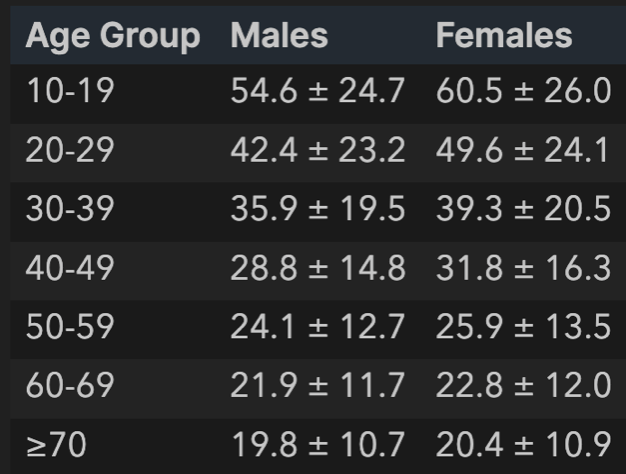
But remember: YOUR normal might be different. What matters most is your personal trend over time. For a more comprehensive breakdown and in-depth science, download my white-paper on HRV.
The Big Five Factors That Impact Your HRV
Age: Generally decreases as we get older (but you can fight this!)
Physical Activity: Exercise is like a savings account for your HRV
Sleep: Your body's nightly reset button
Stress: The invisible HRV thief
Breathing: Your superpower for instant HRV improvement
How to Improve Your HRV
Consistent Sleep Schedule
Same bedtime, same wake time
Cool, dark room
No screens 1 hour before bed
Strategic Exercise
Mix high and low intensity
Watch your recovery
Don't overtrain (use HRV as your guide)
Breathing Practices
Many breath-work techniques work
Find the one that works for you
Practice for 5 minutes, 2-3 times daily
Especially effective before meetings or stressful events
Nutrition Timing
Regular meal times
No late-night eating
Stay hydrated
Stress Management
Daily meditation or mindfulness
Regular nature exposure
Social connections (yes, they affect HRV!)
Pro Tips for HRV Tracking
Measure at the Same Time: First thing in the morning, before getting out of bed
Look for Trends: Weekly and monthly averages tell you more than daily numbers
Connect the Dots: Notice what activities or habits boost or tank your HRV
Your Week 5 Mission 📋
Track Your Morning HRV: Get a baseline for your personal numbers
Experiment: Try one of these daily for a week:
Breath-work 2-3 times per day for five minutes
Earlier bedtime
Post-meal walk
Note the Impact: Keep a simple log of activities and HRV trends
Coming Next Week... 👀
Get ready for our deep dive into technology that can really help with improving HRV.
Share Your Discoveries! 💬
Found a hack that boosted your HRV? Hit reply and let me know! Your experience might help another health explorer in our community.
Here's to your rhythmic health!
Dr. Dan
P.S. Fun fact: Even plants show heart rate variability! The more we look, the more we find that natural systems thrive on variability, not rigidity. Your heart's beautiful dance is part of a much bigger natural pattern! 🌱
Note: While tracking HRV can be incredibly insightful, remember that it's just one of many health markers.